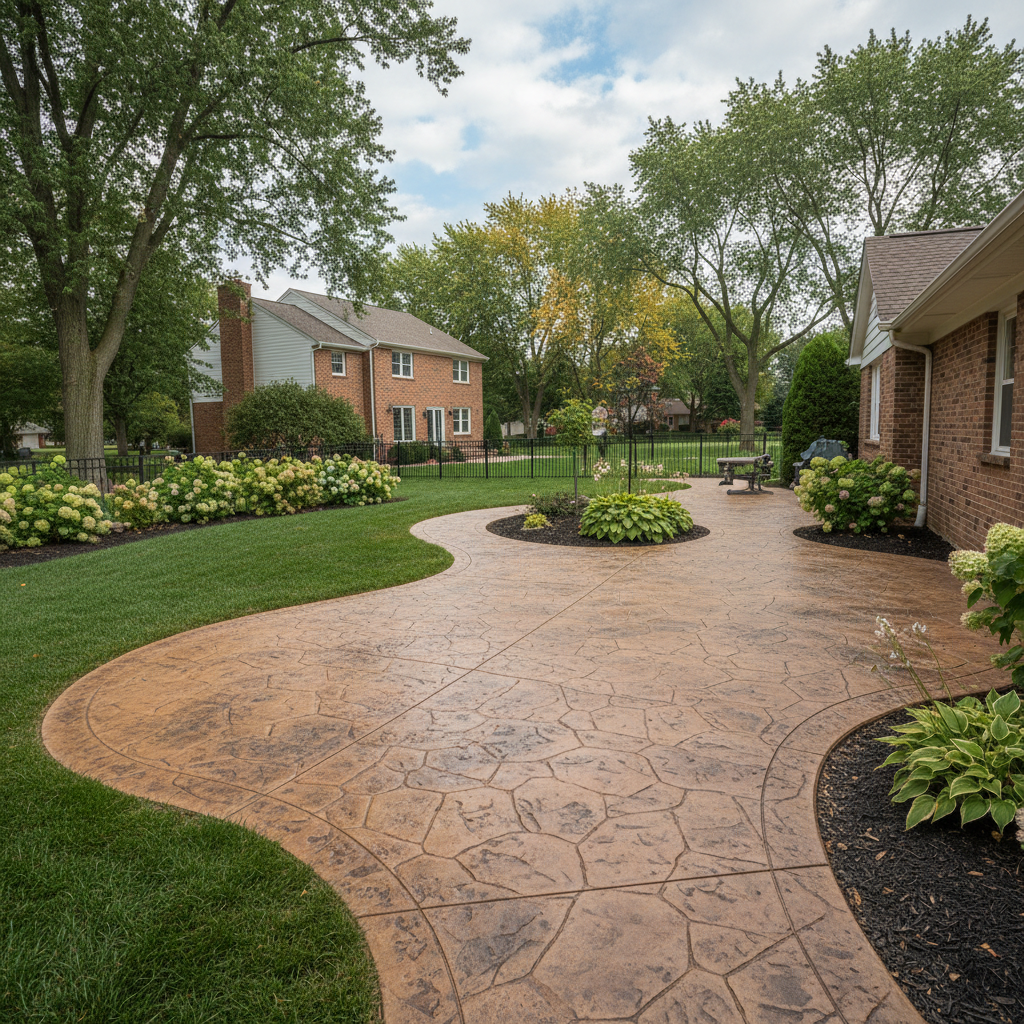
You're probably staring at your driveway or patio, maybe even dreaming about sprucing it up with some decorative concrete. Stamped, colored, exposed aggregate – it all looks fantastic when done right. But let's be real, here in Des Plaines, our weather isn't exactly tropical. That means you've got to think smart about when you tackle this kind of work and how you keep it looking good afterward. It's more than just picking a cool pattern; it's about making sure your investment lasts for years.
When's the Best Time to Pour Decorative Concrete?
Honestly, the absolute sweet spot for pouring any concrete, especially the decorative stuff, is spring and fall. We're talking late April through June, then September through late October. Why those specific times? It all comes down to temperature and humidity, really.
When it's too hot, like those brutal July and August days we often get, concrete cures way too fast. That can lead to shrinkage cracks, and it turns the stamping process into a frantic race against the clock. The crew has to work incredibly quickly, and even then, getting a consistent finish can be tough. Plus, the sun beating down can mess with the color pigments, making them look uneven.
On the flip side, when it's too cold, concrete cures too slowly, or sometimes not at all. If the temperature drops below freezing within the first few days after pouring, you're just asking for trouble. The water in the mix expands when it freezes, and that can damage the concrete's internal structure before it even has a chance to get strong. That's why you won't catch Classic Concrete Co. pouring decorative slabs in December, unless it's an emergency or, say, a very controlled indoor environment.
Ideal conditions usually hover between 50 and 80 degrees Fahrenheit, with not too much wind. A little cloud cover? Even better! It gives us plenty of time to work the surface, get that stamp just right, and make sure the color is evenly applied and sealed properly.
Weather Woes: What Else Affects the Work?
Beyond just temperature, a few other weather factors really hit decorative concrete projects hard:
- Rain: This is a big one. You simply cannot pour concrete in the rain. It washes out the cement paste, weakens the mix, and ruins any chance of a good finish, especially with decorative elements. If rain is in the forecast, we're rescheduling. No exceptions.
- Humidity: High humidity can slow down drying. That's not always a bad thing, actually, since it gives us more working time. Low humidity, though, especially combined with high temperatures and wind, can make the concrete dry too fast, leading to plastic shrinkage cracks.
- Wind: A windy day can dry out the surface of the concrete incredibly quickly, even if the air temperature isn't all that high. This can cause surface cracks and makes it harder to get a smooth, even finish, particularly with colored or stamped concrete where consistency is absolutely key.
- Sunlight: Direct, intense sunlight can lead to uneven drying and mess with color consistency. We often use temporary shades or work in sections to minimize this on bright days.
We're always checking the forecast multiple times a day leading up to a pour. Sometimes, even with the best planning, Mother Nature throws us a curveball. We'll always keep you in the loop about any necessary adjustments.
Protecting Your Decorative Concrete Year-Round
Okay, so you've got your beautiful new stamped patio or colored driveway. Now, how do you keep it looking great through Des Plaines' crazy seasons?
Winter is Your Worst Enemy (and Best Friend)
Our winters are brutal on concrete. The freeze-thaw cycles are the main culprit. Water seeps into tiny pores, freezes, expands, and slowly breaks the concrete apart. This is called spalling. Here's how to fight it:
- Seal it: This is non-negotiable for decorative concrete. A good quality sealer protects against moisture penetration, stains, and UV damage. You should plan to reseal every 2-3 years, or more often for high-traffic areas. I've seen too many beautiful stamped patios in older Des Plaines subdivisions, like those near Rand Park, that have started to spall because they weren't resealed regularly. Don't let that happen to your investment.
- No De-Icers with Ammonium Nitrates/Sulfates: Seriously, avoid these like the plague. They're incredibly corrosive to concrete. Stick to sand for traction, or de-icers specifically labeled as concrete-safe, like those with calcium chloride or magnesium chloride in moderation. Shovel early and often.
- Snow Removal: Be careful with snow blowers and shovels. Metal edges can scrape and damage the sealer, leaving your concrete vulnerable. Use plastic shovels or adjust your snow blower height.
Spring, Summer, and Fall Maintenance
- Clean Regularly: A simple power wash (on a low setting, don't blast it) once or twice a year can get rid of dirt, grime, and mildew. For stubborn spots, a mild detergent and a stiff brush usually do the trick.
- Watch for Stains: Oil, grease, rust – clean these up as soon as you spot them. The longer they sit, the harder they are to remove, even with a good sealer.
- Avoid Heavy Loads: Don't park heavy equipment or overloaded vehicles on your decorative concrete for extended periods, especially when it's new.
- Mind Your Landscaping: Tree roots can eventually cause cracks or heaving. If you're planning new landscaping near your decorative concrete, think about root growth.
Taking care of your decorative concrete isn't rocket science, but it does need a little attention. A well-maintained decorative concrete surface can add serious curb appeal and value to your Des Plaines home for decades. Ignore it, and you'll be calling us for repairs sooner than you'd like. We're always here to answer questions if you've got 'em.