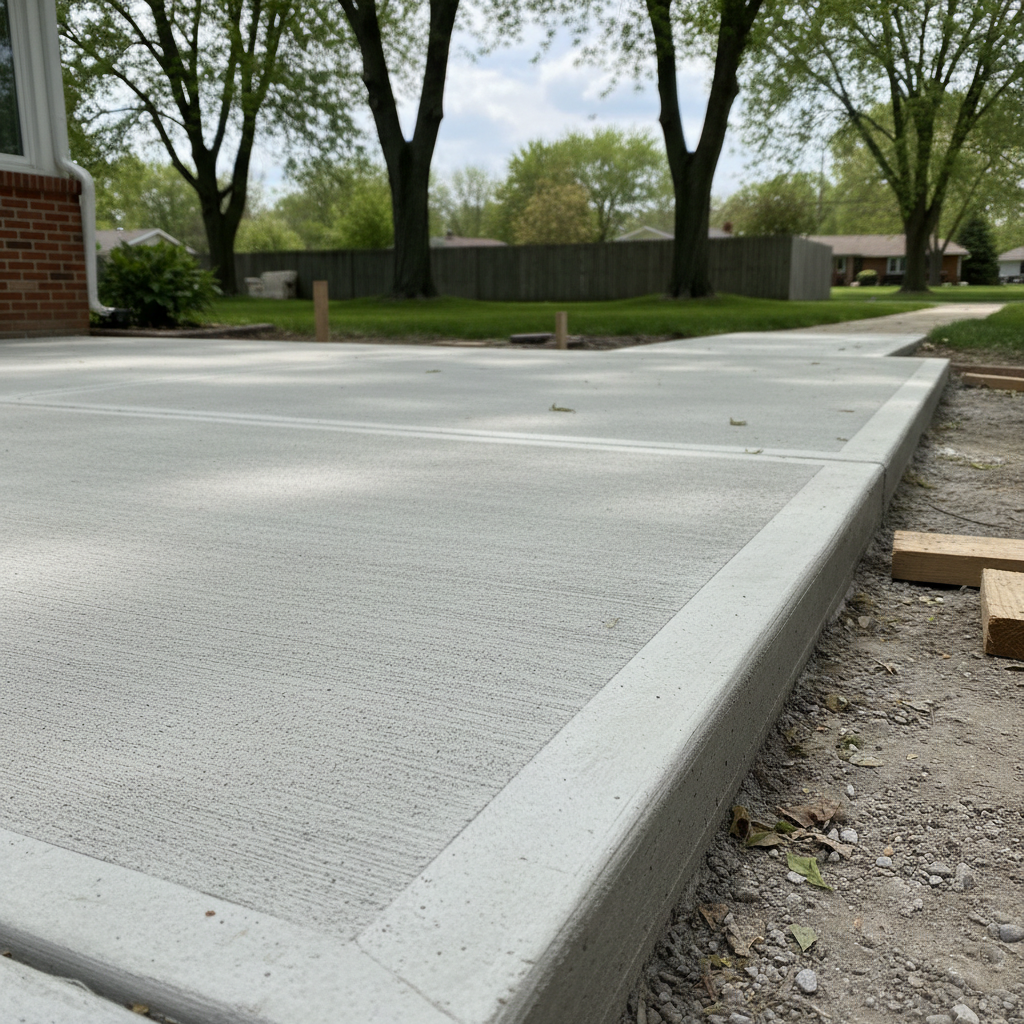
What exactly is concrete flatwork?
When I talk about concrete flatwork, I'm usually talking about any concrete surface that's, well, flat. Think driveways, patios, sidewalks, garage floors, basement floors – anything poured horizontally. It's different from things like foundations or retaining walls, which are structural and often stand upright. For most homeowners, flatwork is what you see and use around your property every single day.
Why do I see cracks in my concrete, and are they always a problem?
Cracks are probably the number one thing people ask me about. And look, concrete cracks. It's just a fact of life. It shrinks as it dries, and it expands and contracts with our crazy Des Plaines weather – hot summers, freezing winters, that constant freeze-thaw cycle we get. These movements put stress on the slab, and eventually, it'll relieve that stress by cracking.
Now, not all cracks are created equal, right? Hairline cracks, especially those that follow control joints (the lines we cut into the concrete), are usually nothing to worry about. They're actually doing their job, letting the concrete move predictably. But if you see wide cracks (say, over a quarter-inch), cracks where one side is significantly higher than the other, or cracks that form a spiderweb pattern over a large area, those could signal a bigger issue. We're talking about potential subgrade problems, improper installation, or even water damage. If you're concerned, it's always best to have a pro take a look.
How long should my new concrete driveway or patio last?
A properly installed concrete driveway or patio around here should give you a good 20 to 30 years, easy. Some last even longer. The key phrase there is "properly installed." That means good subgrade preparation – making sure the ground underneath is stable and drains well – the right concrete mix for our climate, proper thickness, and correct curing. If corners are cut anywhere along that process, you'll see problems a lot sooner. Regular maintenance, like sealing it every few years, also goes a long way in extending its life.
What's the deal with concrete sealing? Do I really need to do it?
You absolutely should. Think of sealing as sunscreen for your concrete. Here in Des Plaines, our concrete takes a beating. We've got road salt, de-icers, oil drips, UV rays, and that constant freeze-thaw I mentioned. A good quality sealer creates a protective barrier that helps repel water, chemicals, and stains. It slows down surface wear and tear, makes it easier to clean, and helps prevent those surface issues like spalling (where the top layer flakes off). I usually recommend sealing new concrete within a year of installation, and then every 2-5 years after that, depending on the sealer type and how much abuse it takes.
Can I pour new concrete over my old, cracked concrete?
This is a common question, and honestly, it's usually not a great idea for flatwork. While it might seem like a quick fix, pouring new concrete over old concrete often leads to problems. The old cracks can "reflect" through the new layer, meaning they'll reappear in your fresh concrete. Plus, you're adding significant weight, which can stress the subgrade further. If the original concrete has underlying issues like poor drainage or an unstable base, just covering it up won't fix those. You'll end up with a thicker, heavier slab that still has the same problems. Most of the time, for a long-lasting solution, it's best to remove the old concrete and start fresh. It's more work upfront, but it saves you headaches and money down the road.
How much does new concrete flatwork cost around Des Plaines?
This is tough to give a precise number without seeing the job, but I can give you a ballpark. The cost of concrete flatwork in Des Plaines depends on a few big factors: the size and thickness of the slab, the complexity of the job (is it a simple rectangle or does it have curves and multiple levels?), access to the site, and any necessary prep work like excavation or old concrete removal. A standard 4-inch thick driveway or patio might run anywhere from $8 to $15 per square foot, sometimes more for decorative finishes or really tricky access. That price usually includes materials, labor, and basic prep. Remember, getting multiple bids is smart, but don't just go for the cheapest. Make sure you're comparing apples to apples and that the contractor is reputable and insured. At Classic Concrete Co, we always give a clear, detailed estimate so you know exactly what you're paying for.
What's the difference between broom finish and smooth finish?
It's all about texture and safety. A broom finish is exactly what it sounds like: after the concrete is poured and smoothed, we drag a special broom across the surface to create a slightly rough texture. This is super important for outdoor flatwork like driveways, sidewalks, and patios because it provides traction. You don't want a slippery surface when it rains or snows, especially in our winters. A smooth, or troweled, finish is achieved by using a power trowel or hand trowel to create a very flat, dense, and often shiny surface. You'll typically see this on interior floors, like in a garage or basement, where you want something easy to clean and you don't need the same level of slip resistance. For anything outside, I'll always recommend a broom finish for safety reasons.