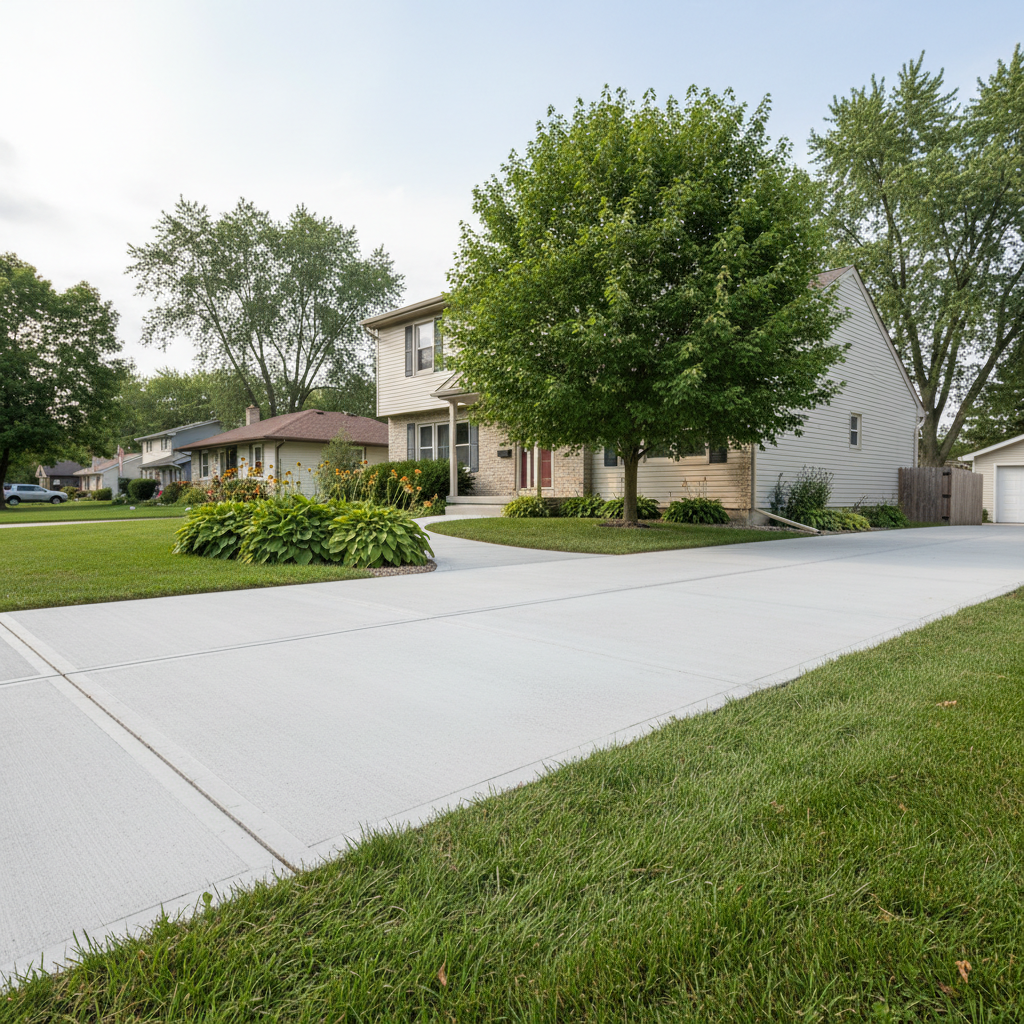
You've got a concrete driveway, patio, or walkway, and you want it to last. That's smart thinking, honestly. Here in Des Plaines, our concrete really takes a beating with the freeze-thaw cycles, road salt, and just plain heavy use. Good news is, a little bit of care goes a long way. I'm going to tell you how to keep your flatwork looking good and performing solid for years.
Regular Maintenance: It's Easier Than You Think
Think of your concrete like anything else you own that you want to last – it needs some attention. It's not high-maintenance, but it's definitely not 'set it and forget it' either, especially with our wild weather around here.
Keep it Clean: Sounds simple, right? But dirt, leaves, and debris can hold moisture against the concrete. That's bad news, particularly when things freeze. So sweep it regularly. If you've got oil stains or other spills, clean them up fast. Don't let them just sit there and soak in. A good power wash once a year can do wonders, but be careful not to use too high a pressure or get too close – especially on older or decorative concrete – because you can damage the surface.
Seal it Up: This is probably the most important thing you can do. A good quality sealer acts like a raincoat for your concrete. It repels water, oil, and other liquids, plus it helps protect against those damaging freeze-thaw cycles we get every winter. I usually recommend resealing every 2-3 years, sometimes more often if it's a high-traffic area or gets a lot of sun. You can tell it's time when water doesn't bead up on the surface anymore, you know?
Watch the Salt: I know, it's winter, and you need to keep your surfaces safe. But be careful with de-icing salts. Calcium chloride is generally better for concrete than rock salt (sodium chloride), which can be pretty aggressive. Better yet, use sand for traction or just shovel early and often. If you do use salt, sweep up the residue as soon as the ice melts.
Mind the Edges: If you've got landscaping right up against your concrete, make sure water isn't pooling there. Proper drainage is key. Sometimes, just a little bit of grading or a small trench can make a huge difference in preventing water from sitting against the slab.
Warning Signs: What to Look For
Your concrete will usually give you clues when something's not quite right. Don't ignore these signals:
Cracks: Small hairline cracks are often normal, especially with our expansive clay soils around here in Des Plaines. But if you see cracks getting wider, longer, or if they're raising one section of concrete higher than another, that's a red flag. These can indicate sub-base issues or significant ground movement.
Spalling or Flaking: This is when the surface of the concrete starts to chip or peel away. It's usually caused by water getting into the concrete, then freezing, expanding, and popping off the surface. It can also happen from poor quality concrete or aggressive de-icing salts. If you see this, your sealer might be worn out, or you might have a bigger moisture problem.
Pitting: Small holes or craters on the surface. Similar to spalling, it's often water-related or from aggregates popping out due to freeze-thaw.
Sinking or Uneven Slabs: If one section of your driveway or patio is noticeably lower than another, or if it's tilting, that's a structural issue. It means the ground underneath isn't supporting it properly. This can create tripping hazards and lead to bigger problems down the line.
Discoloration or Stains: While some stains are just cosmetic, persistent dark, damp spots can indicate a drainage problem or even a leak underneath the slab.
When to Call a Professional
Look, a lot of the regular maintenance, you can handle yourself. Sweeping, cleaning, even applying a new sealer if you're comfortable. But there are times when you really need to bring in someone who knows what they're doing.
If you're seeing those bigger cracks, significant spalling, or if your slabs are sinking or uneven, that's when you call us. Trying to fix major structural issues yourself can often make things worse or just be a temporary band-aid. We've got the tools and the know-how to diagnose the real problem, whether it's a sub-base issue, drainage, or just old age. At Classic Concrete Co, we've seen it all, from the small residential sidewalks in the Cumberland neighborhood to bigger commercial lots. We can tell you if it's a simple repair, if it needs mudjacking, or if it's time for a full replacement.
Don't wait until a small problem becomes a huge headache (and a bigger bill). Catching these things early can save you a lot of grief and extend the life of your concrete significantly. Your concrete is an investment; treat it right, and it'll serve you well for decades.