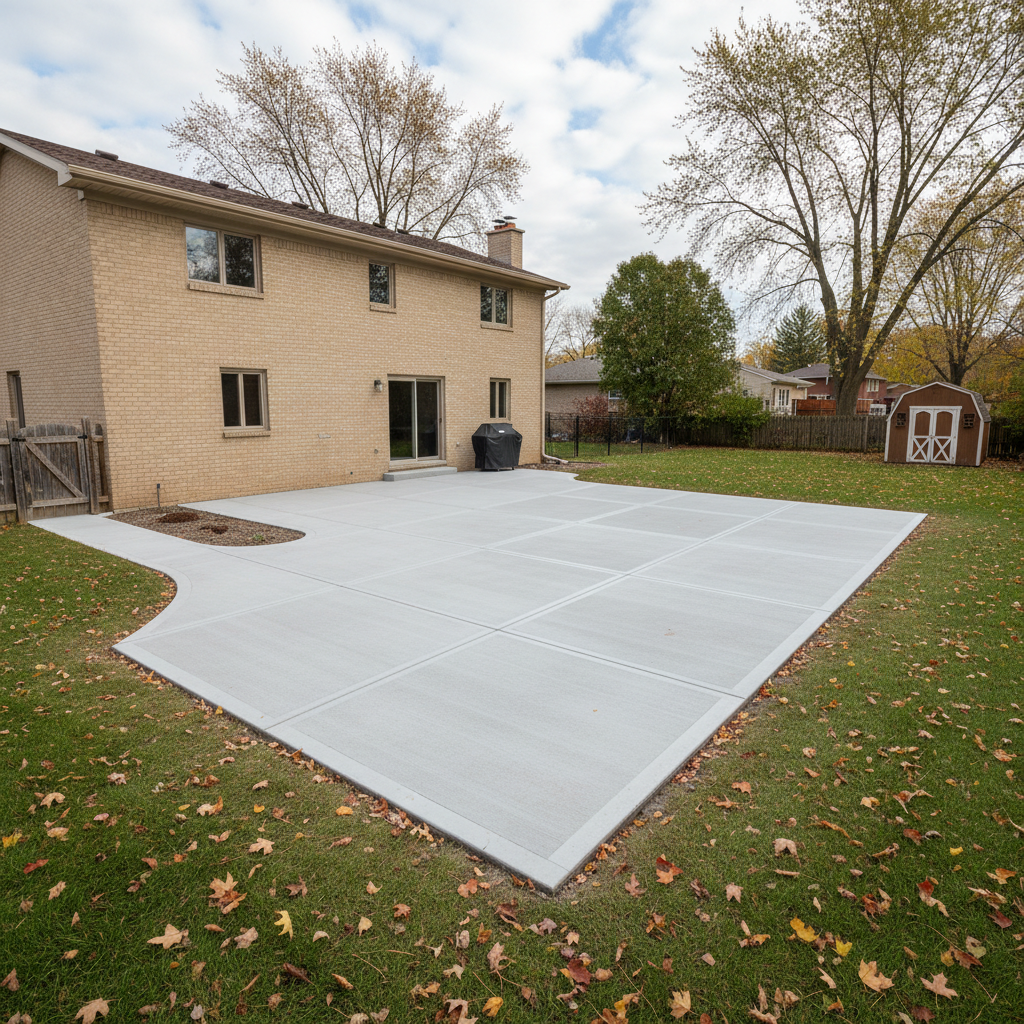
When's the best time to pour concrete around here? Folks ask me that a lot, and it's a fair question. You want your new driveway, patio, or walkway to last, right? A big part of that, honestly, comes down to *when* we pour it and how we protect it from our wild Des Plaines weather.
Scheduling Your Concrete Project: Timing is Everything
The sweet spot for concrete work in Des Plaines? Usually spring and fall. Think late April through June, then again from September through October. Why those particular times? It's all about temperature and moisture. Concrete needs to cure just right – not too hot, not too cold, not too dry, but also not soaked by constant rain.
When July and August bring scorching heat, the water in the concrete mix evaporates way too fast. This can lead to cracking and a weaker slab. Sure, we can try to lessen the impact – using curing compounds or keeping it wet – but it's always an uphill battle. On the flip side, when it gets cold, say in November or early spring, the curing process slows way down. If the concrete freezes too early, before it gets strong enough, you're looking at serious damage. We're talking spalling and delamination. Nobody wants that, believe me.
So, while we *can* pour concrete in the summer or even late fall if conditions are just right, the best long-term results happen when daytime temperatures consistently hover between 50 and 80 degrees Fahrenheit. That gives the concrete plenty of time to hydrate and gain strength at a nice, steady pace.
Weather Conditions That Really Matter
Beyond just temperature, we're always keeping an eye on a few other weather factors:
- Rain: A light drizzle usually won't ruin things if the concrete is already placed and finished. But heavy rain? That can wash out the surface, weaken the mix, and make a smooth finish impossible. If the forecast predicts a downpour, we're rescheduling. It's just not worth the risk, is it?
- Wind: Strong winds can actually be a problem, especially on hot, dry days. It speeds up that surface evaporation I mentioned earlier, which causes plastic shrinkage cracking. We often use windbreaks or apply curing agents faster to fight against this.
- Humidity: High humidity can actually be a good thing. It helps keep the concrete from drying out too quickly. Low humidity, especially with wind, is a recipe for trouble.
- Ground Temperature: People often overlook this one. Even if the air temperature feels fine, a frozen subgrade can cause big issues. The ground needs to be thawed and stable for proper compaction and to prevent settling later on. Those clay soils we have around Des Plaines, especially near places like the Country Club, can hold moisture and stay cold for a while, so we're always checking that.
At Classic Concrete Co, we're always glued to the forecast. We'll definitely let you know if we need to shift the schedule because of weather. It's always better to delay a day or two than to pour in bad conditions and end up with a compromised product.
Protecting Your Concrete Investment Year-Round
Once your concrete is in and cured, your job isn't quite over. You've got to protect that investment, especially with our Illinois winters. Here's how:
First, stay away from de-icing salts that contain ammonium nitrates or ammonium sulfates. These are super harsh and will literally eat away at your concrete over time. Rock salt (sodium chloride) is generally okay in moderation, but for new concrete, sand for traction is a better bet, or products specifically labeled as concrete-safe. Always, always read the labels!
Second, seal your concrete. I really can't stress this enough. A good quality penetrating sealer, applied every few years (check the product's recommendations), will protect your concrete from moisture, freeze-thaw cycles, and even oil stains. Think of it like sunscreen for your driveway.
Third, address cracks early. Small cracks are normal; concrete shrinks a bit as it cures. But if you see cracks growing or spalling happening, get them sealed. Water getting into those cracks and freezing is what makes them expand and do real damage. You can grab crack fillers at any hardware store, or just give us a call if you're not sure what to do.
Finally, keep it clean. Regular sweeping and occasional power washing (on a low setting, not too close) will stop dirt, leaves, and other junk from holding moisture against the surface, which can lead to staining and deterioration.
Taking these steps will help ensure your concrete from Classic Concrete Co stands up to everything Des Plaines weather can throw at it for years to come. If you have any questions about your existing concrete or a new project, don't hesitate to reach out. We're always here to help our neighbors.