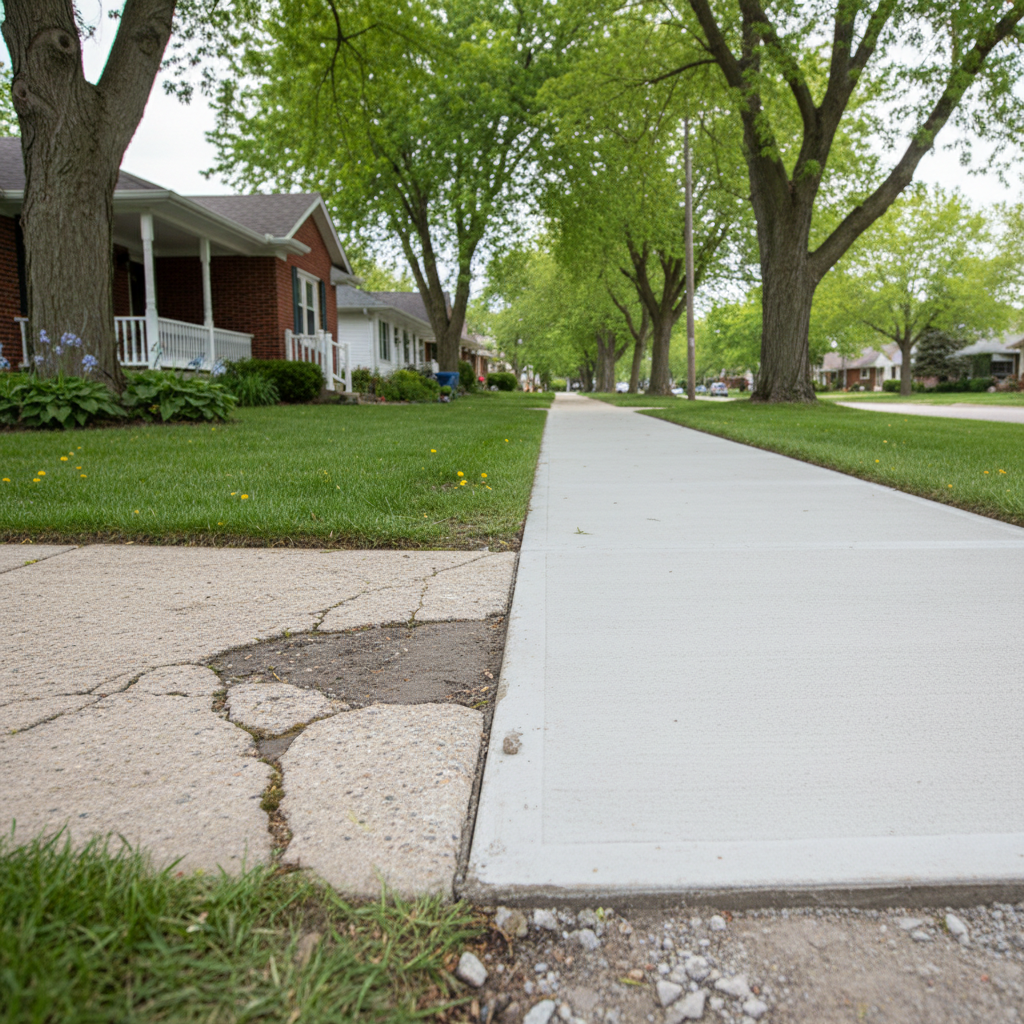
When it's time to put in a new sidewalk or replace an old, cracked one, most folks around Des Plaines usually think of two main options: a classic poured concrete slab or those interlocking concrete pavers. Both can look great, but they're definitely not the same when it comes to cost, how long they last, and what kind of upkeep you're signing up for. As someone who's been doing this work for years with Classic Concrete Co, I've seen both done right and done wrong, and I can tell you what really matters for homeowners in our neck of the woods.
Poured Concrete: The Tried and True
Let's start with poured concrete. This is what most people picture: a solid, continuous slab. We pour it, smooth it out, cut some control joints, and let it cure. It's been the go-to for sidewalks for a reason.
Cost
Generally, poured concrete is going to be your more budget-friendly option upfront. The material itself isn't as expensive as individual pavers, and the installation process, while labor-intensive, is often quicker for a given square footage. You're paying for the concrete mix, the labor to form, pour, and finish it, and maybe some rebar or mesh for reinforcement.
Durability & Longevity
A properly installed concrete sidewalk, especially one with good sub-base prep and control joints, can last a very long time – 30 to 50 years isn't uncommon. It's a solid, monolithic surface. However, this is where our Illinois weather comes into play. The freeze-thaw cycles we get here are brutal on concrete. If water gets into tiny cracks and then freezes, it expands, making those cracks bigger. This is called spalling or scaling. You'll also see settlement cracks if the sub-base wasn't compacted well enough, or if tree roots decide to push things around.
Maintenance
Maintenance is pretty minimal. Keep it clean, maybe seal it every few years to protect against moisture and de-icing salts. If you get a crack, you can try to patch it, but it's tough to make a patch invisible. If a section really breaks up, you're usually looking at cutting out and replacing that whole section, which can be a bit of an eyesore if the new concrete doesn't match the old.
Appearance
For a long time, poured concrete was just... gray. Now, you've got options for stamping, coloring, and exposed aggregate finishes that can really elevate the look. It gives a clean, continuous line, which many people prefer for a more modern or minimalist aesthetic.
Concrete Pavers: The Flexible Alternative
Then you've got concrete pavers. These are individual, pre-cast blocks that interlock to create a surface. Think of them like a big, durable puzzle.
Cost
Upfront, pavers are almost always more expensive than poured concrete. The material cost per square foot is higher, and the installation is more labor-intensive because each paver needs to be laid individually on a carefully prepared base of gravel and sand. It's a precise process.
Durability & Longevity
Pavers are incredibly durable. Because they're individual units, they have a lot of flexibility. They can shift and move slightly with our ground's freeze-thaw cycles without cracking like a solid slab would. If one paver gets damaged, you can usually just pop it out and replace it. A well-installed paver sidewalk can easily last 50+ years. The key here is that